
Financial Modelling for Utility Tariff Setting
This specialised course provides delegates with essential skills and knowledge to develop
comprehensive financial models for setting tariffs in regulated environments. With a strong
focus on practical application, especially in the African context, the programme enables participants
to perform sensitivity analyses and create diverse tariff paths, enhancing their ability to set precise
and effective utility tariffs.
What You Will Gain
The skills needed to set tariffs in a regulated context
Knowledge of tariff objectives, structure, and valuation techniques
The practical skills to build a financial model from scratch
Fundamental knowledge of basic financial concepts and Excel formulas
A deep understanding of financial models
The skills to analyse and provide various tariff paths
Programme Details
STATUS
Applications closed
DATES
DURATION
FORMAT
LOCATION
FEES
Face-to-Face + Online
Application deadline: 24 March 2026
QUESTIONS?
Curriculum
A detailed breakdown of each module covered in the programme.
Contextualise enduring utility challenges in Africa, introduce the fundamentals of economic regulation and financial modelling.
Establishing the regulated asset base and Revenue Requirement
Differences between accounting and cash-based approaches to tariff determination
Use of sensitivity analyses in financial modelling
Who Should Attend
Board members and managers in utilities
Utility board members
Professionals in the power sector
Regulatory authorities
Government officials
Prerequisites
- NQF 4 or equivalent
- English proficiency
- Proficiency in Excel
Teaching Team
Learn from leading academics and industry practitioners with deep expertise in Africa's energy landscape.

Dr. Peter Twesigye
Research Lead – Power Market Reforms & Regulation
Senior Lecturer & Lead Researcher, in Power Market Reforms and Regulation, and Utility Performance, bringing 14 years of infrastructure economics experience. Dr. Twesigye specializes in energy policy, power sector governance, regulatory incentives, and energy transitions. He serves on the High-Level Group of the Africa-Europe Foundation and the Advisory Board of the Academy of Regulatory Professionals at the University of Florida's Public Utility Research Center. He holds a PhD from UCT. His experience includes senior roles at Umeme Ltd and Uganda's National Water and Sewerage Corporation, as well as extensive consulting work across West, East, and Southern Africa for organizations such as the World Bank, AfDB, Oxfam, GFA, Actis LLP, USAID, and Oxford Policy Management.
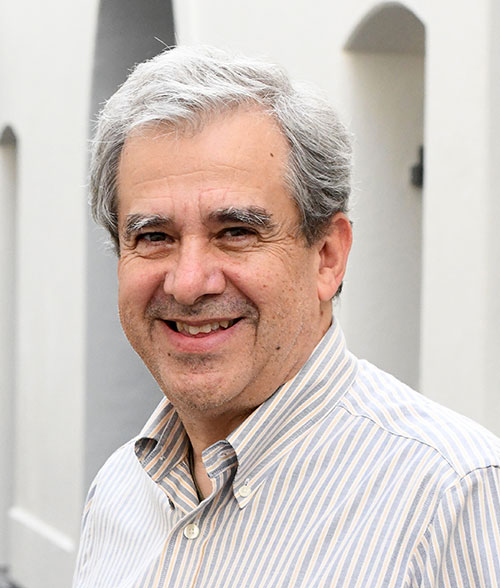
Dr. Martin Rodriguez Pardina
Visiting Faculty · Chief Economist, Ad Hoc Consulting
Martin Rodriguez Pardina is Chief Economist of Ad Hoc Consulting, specialised in economic regulation of utilities. He has experience in regulation and restructuring of public utilities in Latin America, Middle East, Africa, Russia and India. He holds a PhD in Economics from the University of Cambridge and has co-authored two World Bank publications on price-cap regulation and regulatory accounting. Martin is also the anchor lecturer for the UCT GSB 'Managing power sector reform and regulation' annual short course.
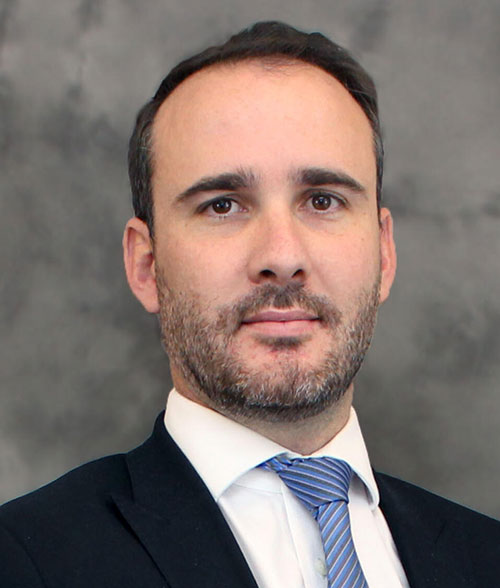
Haydn Palliser
Visiting Faculty · Lecturer, Yale & Columbia Universities
Haydn Palliser is a Lecturer at Yale and Columbia Universities, and a Principal at Pivotal180 — a firm focused on training and advisory in the energy, infrastructure, and project finance sectors. With 18 years in the industry, Haydn has a global outlook having worked across Africa, Asia, the Middle East, Europe, the Americas, and Asia Pacific. His particular expertise lies in simplifying complex topics with best-practice financial modelling. He was previously Managing Director for Corality and co-head of infrastructure and energy for Mazars in the Americas.
